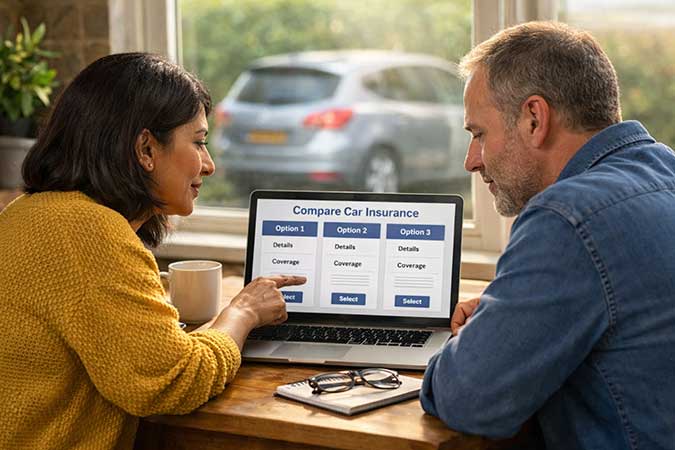
Two people can insure the same car and get very different quotes. That’s because insurers rate the driver as much as the vehicle. Age, experience, driving history and even how your day-to-day life looks on paper all feed into the risk model.
This page groups together the driver situations that most commonly affect premiums and acceptance. It is not about labelling anyone as a “good” or “bad” risk. It’s about how underwriting tends to work, and what details insurers usually ask for.
New Drivers and Newly Qualified Drivers
Newly qualified drivers are often priced higher because the claims data for early driving years is stronger. Insurers usually focus on licence length, the type of car, annual mileage and where the vehicle is kept overnight.
Telematics policies (often called black box insurance) are common here. They can suit drivers who are happy to have driving behaviour monitored. They do not suit everyone. If the policy includes curfews or driving-score conditions, it is worth reading those carefully before purchase.

Usually, all other things being equal the older, more experienced and safer the driver, the lower the premium.
Young Drivers
Young drivers tend to see higher premiums for the same underlying reason: frequency and severity of claims in the broader data. What makes the biggest difference is usually the combination of car choice, mileage and where the vehicle is parked.
Adding an experienced named driver can sometimes change pricing, but the policyholder and main driver must be stated accurately. Getting that wrong can create serious problems if a claim is made.
Drivers With Claims History
Past claims can affect pricing even when they were not your fault. Insurers consider the number of incidents, how recent they were and the type of claims involved. A single older claim may have a smaller impact than multiple recent incidents.
Some insurers also focus on claim type, for example theft claims or multi-vehicle collisions, because those tend to be associated with different risk patterns.
Drivers With Penalty Points or Convictions
Convictions and points can influence both acceptance and price. The impact varies depending on the offence, the number of points, how recently it occurred and whether there is a pattern over time.
For more detail on this area, see Convicted Driver Car Insurance.
Drivers After a Cancellation or Lapse in Cover
A policy cancelled by an insurer, particularly for non-payment or non-disclosure, can make future cover harder to arrange. Applications may ask directly whether you have ever had insurance cancelled, refused or voided. That question usually needs to be answered accurately, even if the cancellation happened years ago.
A gap in cover can also raise questions, especially if you owned a vehicle during that period. Some insurers see uninterrupted cover history as a sign of stability, while gaps can trigger extra checks.
Older Drivers
Many older drivers have long claim-free histories, which can help premiums. However, insurers may also factor in age-related risk trends. This can lead to higher premiums for some motorists as they get older, even with no claims.
At this stage insurers often focus on annual mileage, the type of driving (short local trips versus regular motorway use), and the vehicle’s safety features. It can also be worth checking the accuracy of job status or retirement status, as the way it is recorded can affect rating categories.
Drivers With Medical Conditions
Some policies ask whether you have medical conditions that affect driving. This can be a sensitive area. What matters is what the insurer asks and what you are required to disclose. Medical information is also linked to driving licence rules, which sit outside the insurance policy itself.
If a policy asks about medical conditions, answer in line with the questions asked. If you are unsure what needs to be declared, it is usually safer to clarify before purchase rather than guess.
Students and Drivers With Multiple Addresses
Students often split time between a term-time address and a home address. Insurers may ask where the vehicle is normally kept overnight, and the answer can change pricing. It also affects theft exposure and local claim patterns.
It helps to be consistent about which address is the main one for the vehicle, and to keep the insurer updated if storage arrangements change.
Drivers Without a Standard UK Licence Setup
Insuring drivers with non-UK licences, recently exchanged licences or unusual residency arrangements can reduce the number of insurers available. Eligibility often depends on how long the licence has been held, whether the vehicle is UK registered, and the address and residency information provided.
If your licence or residency situation is not straightforward, it can be useful to compare providers carefully and check the policy eligibility rules before applying.
Households With More Than One Driver
Multi-driver households can sometimes benefit from multi-car policies or structured named-driver arrangements, but pricing depends on the whole picture. Who is the main driver, how many vehicles are insured and how the cars are used all influence quotes.
Where you have two or more vehicles, it is worth comparing a multi-car quote against separate policies. A combined policy is not automatically cheaper in every case.
What Insurers Usually Ask for by Driver Type
Different profiles trigger different questions. Some of the most common are:
- Licence type and how long you have held it
- Claims and convictions history and dates
- Occupation and employment status
- Annual mileage and type of use
- Where the car is kept overnight
- Other drivers on the policy and their details
Getting these details consistent across quotes helps you compare like with like. If premiums change sharply after you adjust a single answer, it is often because that answer moves you into a different risk category.
For how pricing factors interact overall, see What Affects Car Insurance Costs?. If you are dealing with renewals, changes or cancellations, Managing Your Car Insurance Policy covers how policy administration typically works.
 They are members of the British Insurance Brokers Association, John Stow House, 18 Bevis Marks, London EC3A 7JB; Membership number: 007759.