
Car insurance pricing in the UK is built on risk assessment. Insurers estimate the likelihood of a claim and the potential cost of that claim, then price accordingly. The result is that two drivers with similar cars can see very different premiums.
This guide explains the main rating factors insurers typically use. It does not focus on shortcuts or loopholes. Instead, it sets out how underwriting works in practice and why certain details carry more weight than others.
Driver Profile and History
The person behind the wheel is one of the strongest pricing influences. Age, driving experience and previous claims all affect how insurers assess risk.
Age and Experience
Younger and newly qualified drivers statistically generate more claims. As experience increases and claim-free years build, premiums often reduce. That does not happen automatically each year, but risk weighting usually shifts over time.
Claims and Convictions
Previous at-fault claims, non-fault claims and motoring convictions can all influence future pricing. The impact depends on severity, recency and frequency. Insurers also consider whether incidents show a pattern of higher risk behaviour.
No Claims Bonus
A no claims bonus reduces premium as claim-free years accumulate. Protection options may preserve discount levels after limited claims, though overall premiums can still rise following an incident.
For detailed guidance on how NCB works, see No Claims Bonus and Driving History.
Where You Live
Postcode remains a major rating factor. Insurers use regional claims data, theft rates and repair costs to determine risk bands. Two identical cars can attract different premiums simply due to local claim frequency.
Parking arrangements also matter. Off-street parking, garages and gated areas may reduce certain risks, while regular on-street parking can increase exposure.
The Car Itself
Vehicle characteristics strongly influence premium levels. Insurers consider performance, repair costs and theft attractiveness.
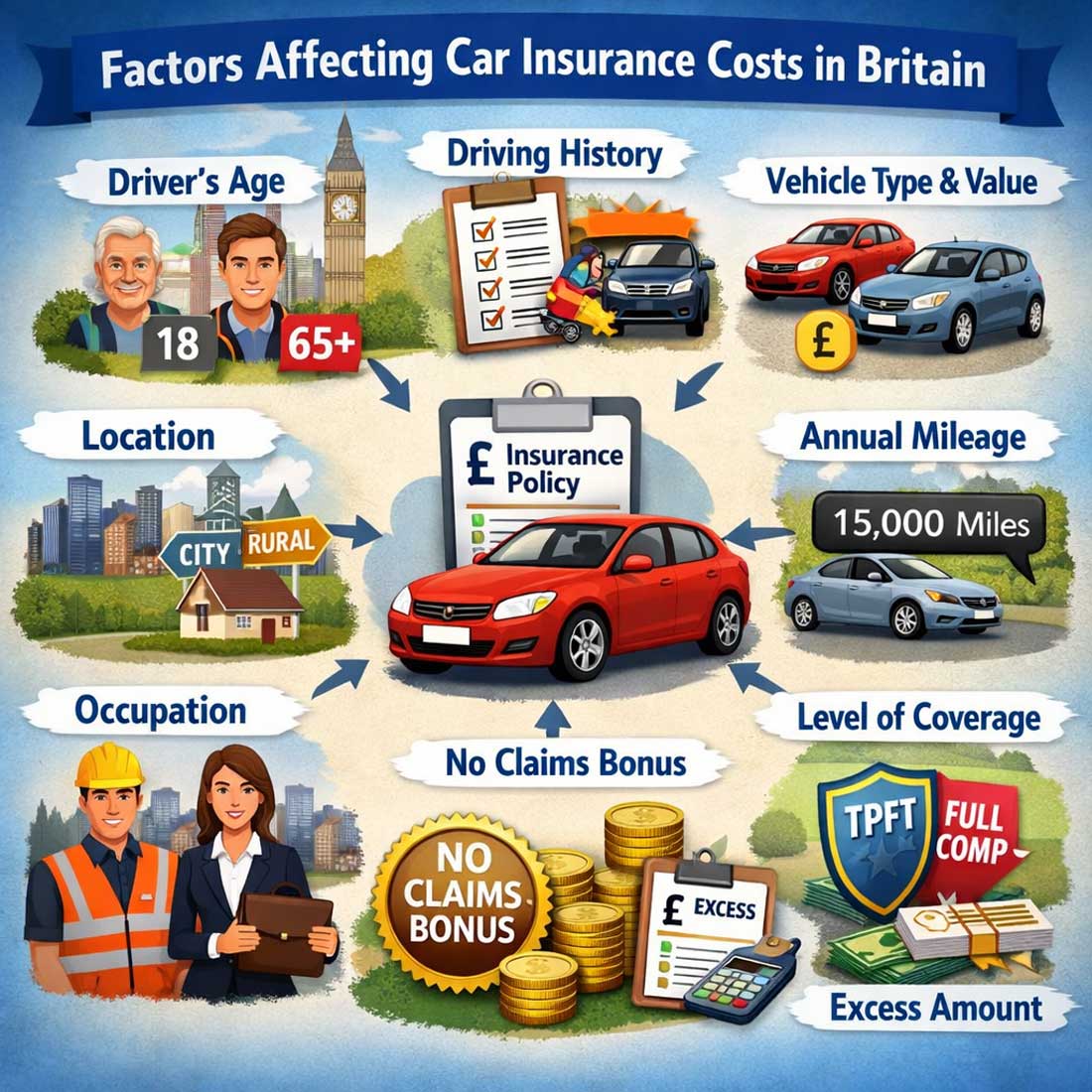
Some of the main factors that affect the cost of your premium
Insurance Group
Cars in lower insurance groups generally cost less to insure. Groups reflect repair complexity, parts pricing and overall risk profile.
Engine Size and Performance
Higher engine capacity and performance ratings often correlate with increased claim severity. Performance is not judged purely on engine size, but it remains a contributing factor.
Vehicle Type
Electric cars, hybrids, classics and modified vehicles are assessed differently. Repair networks, battery costs and specialist parts availability influence pricing models.
For vehicle-specific guidance, see Car Insurance by Vehicle Type and Category.
How the Car Is Used
Usage affects exposure to risk. The more time a vehicle spends on the road, the higher the probability of an incident.
Annual Mileage
Higher declared mileage generally increases premium. Estimates should be realistic. Under-declaring mileage can create complications if a claim arises.
Type of Use
Social and domestic use differs from commuting. Business use, hire and reward and delivery work sit in higher risk categories.
More on this can be found in Business and Work-Related Car Insurance.
Occupation and Lifestyle Factors
Occupation can influence underwriting because statistical claims patterns vary across job categories. The effect is based on aggregate data rather than individual driving ability.
Changes in employment should be declared, as insurers rate policies based on declared occupation at the time of quotation.
Payment Method
Paying monthly usually includes interest, as the insurer is effectively offering credit. Paying annually avoids instalment charges but requires higher upfront outlay.
Payment structure does not change the underlying risk rating, but it affects the total cost over the year.
Security and Safety Features
Factory-fitted immobilisers and alarms can reduce theft risk. Some insurers recognise additional approved tracking systems. However, cosmetic additions without formal security accreditation typically do not influence rating significantly.
Market Conditions and Claims Inflation
Premiums are also influenced by wider market conditions. Rising repair costs, parts shortages and increases in personal injury claims can affect pricing across the market, even for drivers with unchanged circumstances.
Bringing It Together
Car insurance pricing is not determined by a single factor. It reflects the combined assessment of driver history, vehicle characteristics, usage, location and broader market trends.
Understanding these elements makes renewal decisions clearer and helps explain why quotes differ between providers. For practical steps on managing renewals and policy changes, see Managing Your Car Insurance Policy.
 They are members of the British Insurance Brokers Association, John Stow House, 18 Bevis Marks, London EC3A 7JB; Membership number: 007759.