
Everyone wants cheaper car insurance. The difficulty is separating what genuinely affects price from what simply sounds helpful. Premiums are calculated using risk models built from claims data, not guesswork. So if you want lower quotes, the starting point is understanding how insurers think.
This guide brings together the main pricing influences in one place. It focuses on the factors that tend to move the number meaningfully, rather than minor tweaks that rarely change much.
Start With the Right Type of Cover
It sounds obvious, but choosing the appropriate level of cover matters. Comprehensive policies are not always more expensive than third party or third party, fire and theft. Pricing depends on claims patterns, not simply the label on the policy.
Before assuming the cheapest level of cover is automatically third party, compare all options. Sometimes comprehensive cover is priced competitively because the risk profile of drivers choosing it differs.
Your Excess: Lower Premium, Higher Risk
Increasing your voluntary excess can reduce the premium because you agree to pay more towards any claim. However, this only makes sense if you could realistically afford that excess amount if something went wrong.
A very high excess may reduce the quote but can leave you exposed later. The balance needs to be practical, not just attractive on screen.
Mileage and Usage
The more you drive, the more exposure there is to potential claims. Declaring accurate annual mileage is important. Lower mileage can reduce premiums, but underestimating significantly could create problems if a claim arises.
Likewise, ensure the type of use is correct. Social and domestic driving is rated differently from commuting or business use. Declaring the correct usage keeps pricing aligned with actual risk.
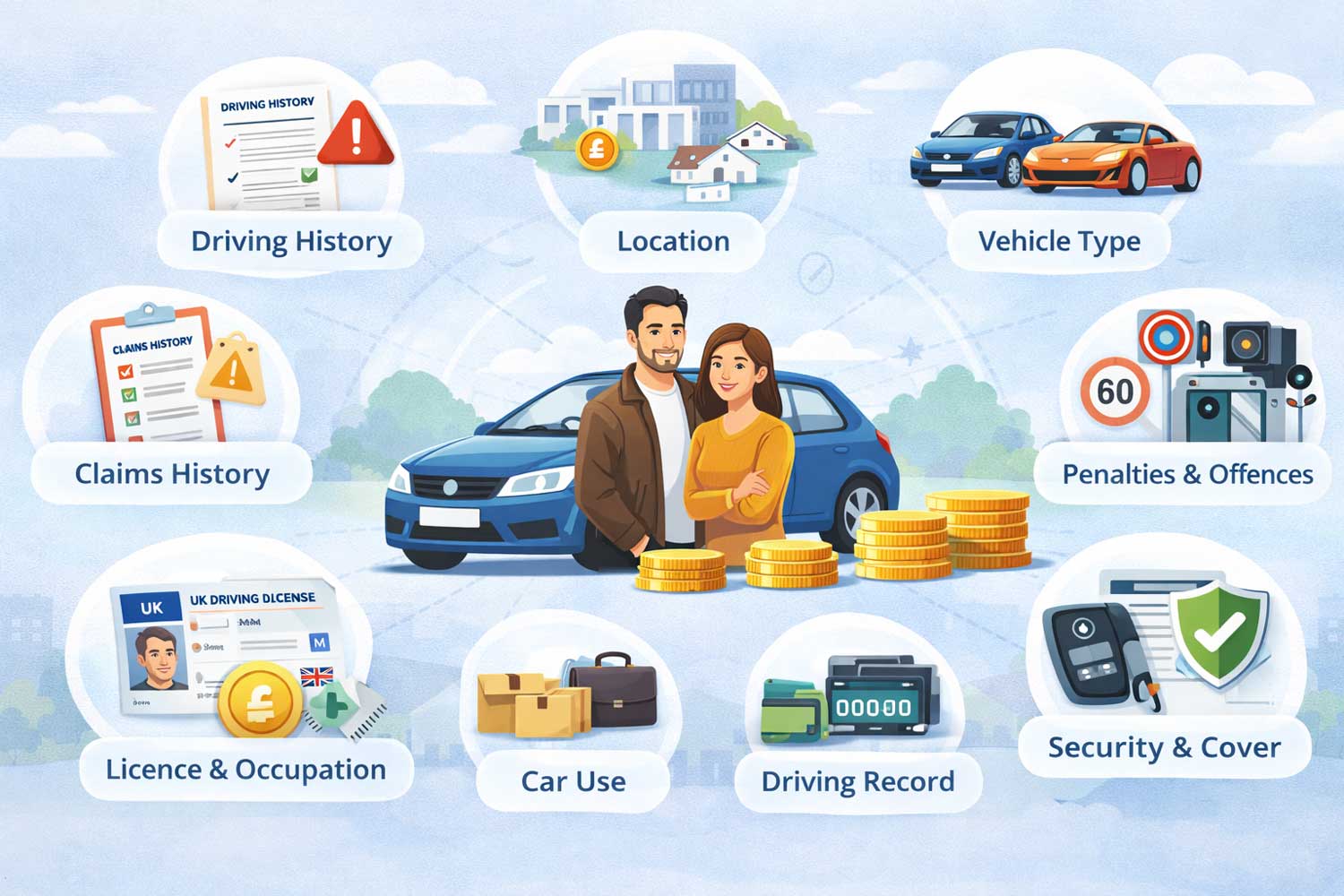
Many different factors can affect your car insurance premium
Car Choice and Insurance Group
Vehicle selection is one of the biggest long-term pricing decisions. Insurance groups reflect repair costs, parts pricing and performance. A modest engine, widely available parts and lower theft appeal usually result in more competitive premiums.
If you are considering changing cars, checking the insurance group before buying can avoid surprises later.
Where the Car Is Kept
Postcode remains a major rating factor. Theft rates, accident frequency and fraud patterns all influence regional pricing. You cannot change your area easily, but you can ensure parking details are accurate.
Off-street parking or a garage may reduce certain risks compared with permanent on-street parking, though the impact varies by location.
Named Drivers and Policy Structure
Adding an experienced named driver can sometimes reduce premiums if that person genuinely uses the vehicle. However, misrepresenting who the main driver is can invalidate cover. Accuracy matters more than chasing a lower figure.
Multi-car policies may offer savings when insuring more than one vehicle in the same household. Whether this is cheaper than separate policies depends on the drivers and vehicles involved.
Renewal Timing
Quotes can vary depending on when you obtain them. Many insurers allow renewal several weeks before the policy ends. Reviewing options early provides more time to compare and avoids last-minute decisions.
Allowing a policy to lapse is rarely helpful. Continuous cover history is often viewed more favourably than gaps.
Payment Method
Paying annually usually avoids instalment interest. Monthly payments spread the cost but often increase the total paid over the year. If affordability allows, annual payment can reduce overall expense.
Security and Telematics
Factory-fitted immobilisers and approved tracking systems may influence theft risk. Telematics policies, often known as black box insurance, monitor driving behaviour and can result in lower premiums for drivers who demonstrate lower-risk habits.
Telematics is more common for younger or newly qualified drivers, but availability varies.
Claims History and Driving Record
Claim-free years reduce premiums through no claims bonus discounts. Avoiding unnecessary small claims can preserve discount levels, though this depends on individual circumstances.
Penalty points and recent claims generally increase premiums. Over time, their impact usually reduces as they become less recent.
Comparing Quotes Carefully
When comparing quotes, ensure the level of cover and excess are genuinely comparable. A lower headline price may reflect higher excess or reduced optional features.
Always check that the information entered is accurate. Small differences in occupation wording, mileage or usage can change the quote. Consistency across comparisons helps ensure you are comparing like with like.
The Bigger Picture
Cheap car insurance is not achieved through one single adjustment. It reflects the overall risk profile: driver history, vehicle choice, location, usage and market conditions. Some factors are within your control, others are not.
Understanding which elements carry real weight makes pricing easier to interpret at renewal. For a deeper explanation of how insurers calculate premiums, see What Affects Car Insurance Costs?. For guidance on managing renewals and mid-term changes, visit Managing Your Car Insurance Policy.
 They are members of the British Insurance Brokers Association, John Stow House, 18 Bevis Marks, London EC3A 7JB; Membership number: 007759.