
This is the part of car insurance most people only pay attention to when something has already happened. An accident, a theft, a vandalism claim, a windscreen crack, a car that won’t be repaired because it’s been written off. Suddenly the details matter, and they matter quickly.
This guide explains how claims are typically handled in the UK, what “write-off” really means, and what you can do if you disagree with a decision. It won’t cover every insurer’s process line by line, but it will give you the common shape of things so you know what questions to ask.
What Happens When You Make a Claim
Most claims follow the same broad steps: you notify the insurer, they gather information, assess liability (where relevant), and then decide whether the car is repaired, replaced (in the sense of a cash settlement), or treated as a total loss. The time it takes varies depending on complexity and the availability of repair slots or parts.
Insurers usually ask for details such as where the incident occurred, who was involved, when it happened, what damage occurred and whether the vehicle is driveable. Photos can help. So can being precise about what happened, even if you are still waiting on a police reference number or third-party details.
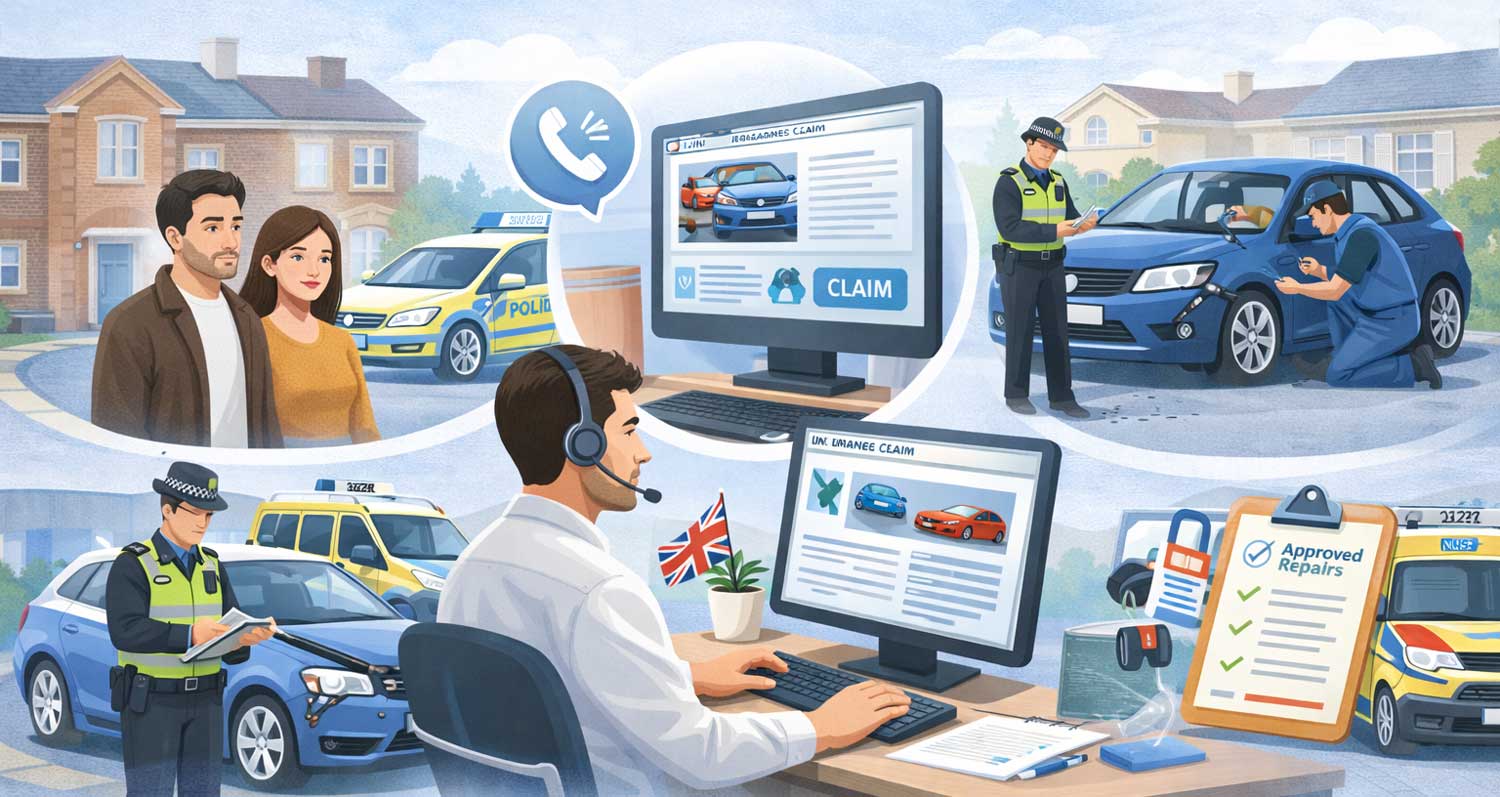
From accident to repair: the claims process in action
Repairs, Approved Repairers and Courtesy Cars
Many policies work with approved repair networks. That can speed up authorisation and billing, but it also means you may be directed to a particular garage. Some policies allow you to choose a repairer, others are more restrictive, and some offer choice but on different terms.
Courtesy cars are another area where policy wording matters. Some policies provide a small courtesy car while yours is being repaired. Others only provide one if you use an approved repairer. Some provide hire car cover as an optional extra. If you rely on a car day to day, check what your policy says before you need it.
When an Insurer Decides the Car Is a Write-Off
A car is usually classed as a total loss when repair costs are not considered economical compared with the vehicle’s value, or when the damage is too severe. This doesn’t always mean the car is “wrecked”. Sometimes it means the repair cost, time and risk of further issues make repair impractical within the insurer’s criteria.
Write-offs are commonly recorded under category codes. The category affects what can happen next, including whether the vehicle can return to the road. Exact handling depends on the category and the requirements that apply to that vehicle at the time. If you are buying a previously written-off vehicle or insuring one, insurers may treat it differently, and acceptance can vary.
If this is your situation, see Car Insurance for Written-Off Cars.
Valuation: Market Value and Why Disputes Happen
When a car is written off, settlement is usually based on market value at the time of the loss, not what you paid for it and not what you still owe on it. Market value disputes are common, particularly when:
- The car had unusually low mileage for its age
- The model is scarce locally and prices vary widely
- The car had extras that affect resale value
- Used car prices have been moving quickly
If you disagree with a valuation, it helps to gather evidence that matches your car as closely as possible: same model, trim, age, mileage and condition. Screenshots of adverts can help, but they need to be comparable and current. Service history, receipts for recent work and documentation of condition can also be relevant.
Fault, Non-Fault and What That Means Practically
People often think “non-fault” means “no impact”. In practice, insurers still record the incident. A non-fault claim can still influence future pricing because it indicates exposure to risk, even if the cost is recovered from a third party.
Liability decisions can take time, especially where accounts differ, evidence is limited or there are multiple vehicles involved. Insurers may make interim decisions while the recovery process runs in the background.
Uninsured Drivers and Unclear Third-Party Details
If the other driver is uninsured, unidentified or you cannot obtain details, your policy may still respond depending on your level of cover. Some policies include uninsured driver protection, but definitions and conditions vary.
Where evidence is limited, insurers may rely heavily on police reference numbers, witness statements, dashcam footage and damage assessment. It’s one of those situations where a tidy folder of evidence can genuinely make things easier.
Common Reasons Claims Get Complicated
Claims usually become difficult when there is uncertainty. Typical flashpoints include:
- Disagreements about what happened or who was responsible
- Concerns about non-disclosure, for example undeclared modifications or incorrect main driver details
- Vehicle value disputes after a total loss
- Delays due to parts shortages or repair backlogs
- Questions about where the car was kept or how it was used
It is worth being careful with wording when reporting a claim. Be accurate, be consistent, and if you genuinely do not know something yet, say so rather than guessing.
How to Challenge a Decision
If you disagree with a claim decision, settlement amount or a complaint response, the first step is normally to raise it formally with the insurer. Insurers have an internal complaints process and should explain how to use it.
If the insurer does not resolve the issue to your satisfaction, you may be able to refer the matter to the Financial Ombudsman Service. The Ombudsman looks at disputes between consumers and financial firms and can review whether the insurer acted fairly within the terms and circumstances.
Keeping Records for Future Quotes
After any incident, it helps to keep a simple record: date, what happened, whether it was fault or non-fault (once confirmed), and any claim reference numbers. Insurers often ask for claim history details at renewal or when you switch.
For how claims history interacts with pricing, see What Affects Car Insurance Costs?. For policy changes, renewals and cancellations, Managing Your Car Insurance Policy covers the administrative side of things.
 They are members of the British Insurance Brokers Association, John Stow House, 18 Bevis Marks, London EC3A 7JB; Membership number: 007759.