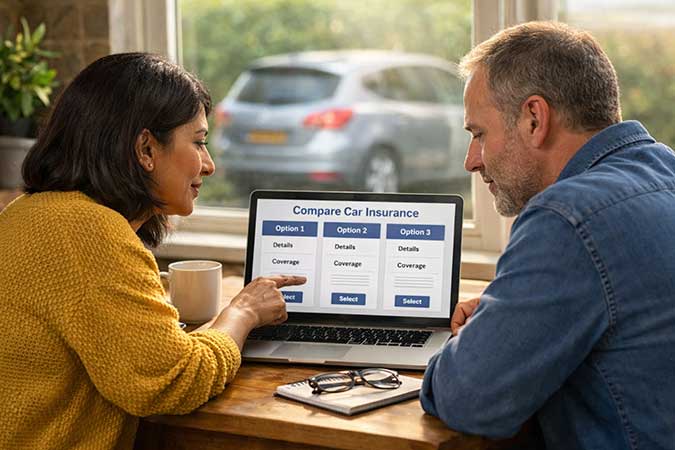
Learning to drive usually starts long before the test. Insurance has to be in place from the moment a provisional licence holder gets behind the wheel on a public road. The rules are straightforward, but the options can vary depending on whose car is being used and how often the learner is driving.
This page explains how learner driver insurance typically works in the UK and what insurers usually require.
Who Needs Learner Driver Insurance?
Anyone driving on a provisional licence must be insured. It does not matter whether the car belongs to them, a parent, a partner or someone else. Insurance must be in place before driving begins.
If the learner is using a driving instructor’s car, the instructor’s policy normally covers the lesson. If practising privately in someone else’s car, separate insurance arrangements are required.
Adding a Learner to an Existing Policy
One common option is to add the learner as a named driver on an existing policy. This allows the learner to drive the insured vehicle while supervised, subject to the policy terms.
Adding a learner can increase the premium because the risk profile changes. The amount depends on the car, the postcode and the supervising driver’s history.
The main driver must still be declared accurately. If the learner becomes the person using the car most of the time, that needs to be reflected properly in the policy details.
Separate Learner Driver Policies
Another option is a standalone learner driver policy. These policies insure the learner specifically and often sit alongside the main policy on the car. That means the car owner’s no claims bonus is usually not affected if the learner makes a claim under the separate learner policy.
Standalone learner policies are commonly available for short periods or several months at a time. Eligibility and limits vary by insurer.
Using Your Own Car as a Learner
If the learner owns the car, they must arrange insurance in their own name. The car must also be taxed and, where required, have a valid MOT. Standard annual policies are available for provisional licence holders, though premiums can be higher than for experienced drivers.
Some insurers offer telematics options for learners, which monitor driving behaviour and can influence pricing.
Supervising a Learner Driver
UK law requires a supervising driver to meet certain conditions. The supervisor must usually:
- Be at least 21 years old
- Have held a full driving licence for the relevant vehicle type for at least three years
- Be qualified to drive the vehicle themselves
The supervisor should be insured to drive the car if necessary.
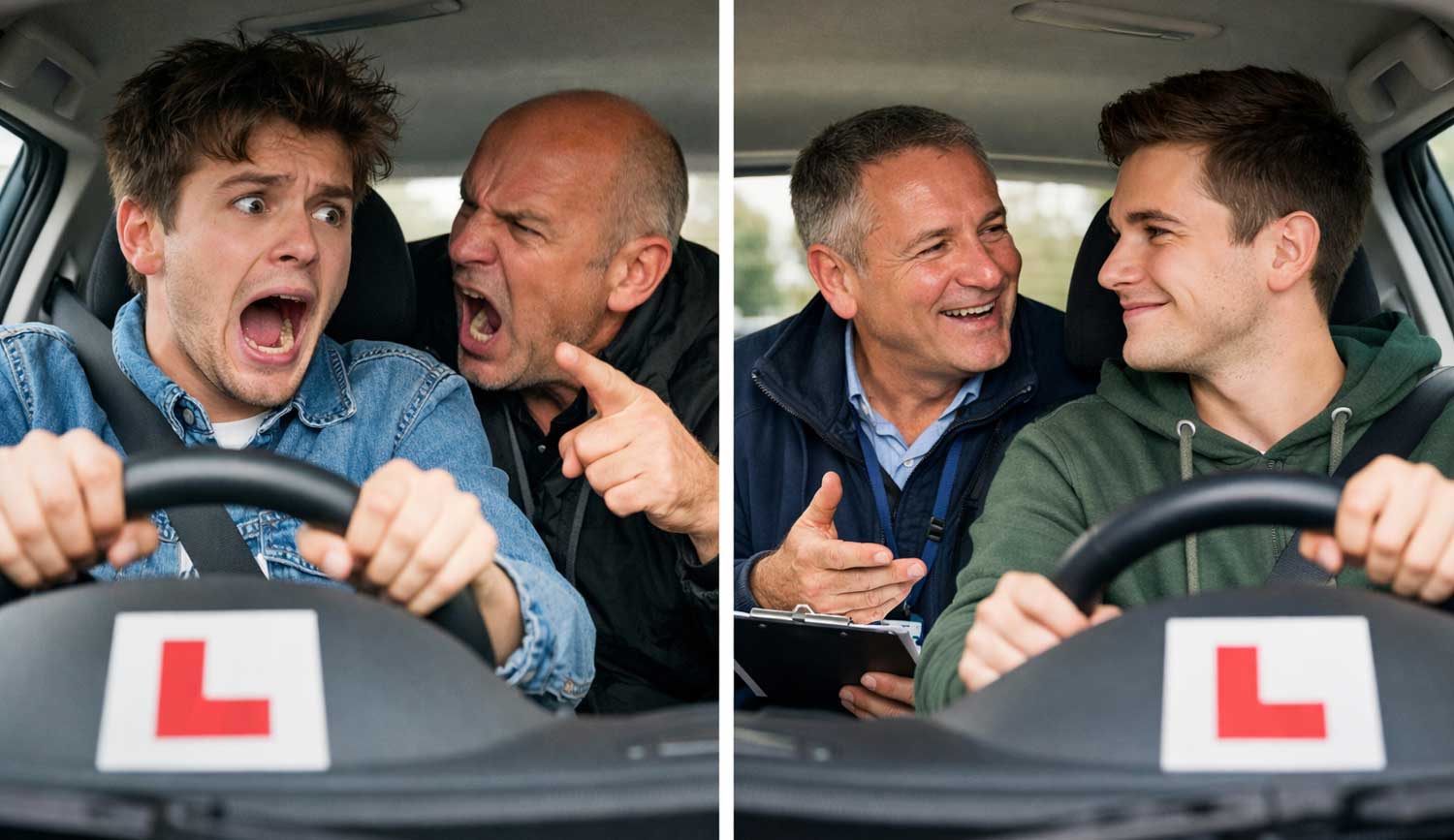
Calm guidance leads to safer driving.
L Plates and Legal Requirements
When a provisional licence holder drives, L plates must be clearly displayed on the vehicle. The learner must follow provisional licence restrictions, including not driving on motorways unless with an approved driving instructor in a dual-controlled car.
Insurance does not override these legal requirements. Both must be complied with.
After Passing the Test
Once the practical test is passed, the learner status ends immediately. The insurer should be informed as soon as possible because the risk category changes. Continuing to drive under a learner-specific policy after passing may invalidate cover.
Premiums can change at this stage. Some policies adjust automatically. Others require a new policy to be arranged.
No Claims Bonus for Learners
Some learner policies allow the driver to build no claims bonus during the learning period, provided a full year of cover is completed without claims. Not all policies offer this, so it is worth checking before purchase.
If the learner was added as a named driver on someone else’s policy, they would not usually build their own no claims bonus from that arrangement.
Points to Check Before Buying
Before arranging learner driver insurance, it helps to confirm:
- Who owns the vehicle
- How often the learner will practise
- Whether a separate policy protects the main driver’s no claims bonus
- Whether telematics is required
- What happens immediately after passing the test
Learning to drive already involves enough to think about. Making sure the insurance arrangement matches how the car will actually be used avoids unnecessary complications later.
For a broader explanation of how insurers calculate premiums, see What Affects Car Insurance Costs?. For renewals and policy changes, Managing Your Car Insurance Policy explains how policies are typically handled over time.
 They are members of the British Insurance Brokers Association, John Stow House, 18 Bevis Marks, London EC3A 7JB; Membership number: 007759.