
Car insurance isn’t one single product. It’s a framework made up of different levels of cover and optional extras. The headline description, comprehensive or third party, only tells part of the story. What matters is what the policy actually promises to do if something goes wrong.
This page explains the main types of car insurance cover available in the UK and how they are commonly structured.
Third Party Only
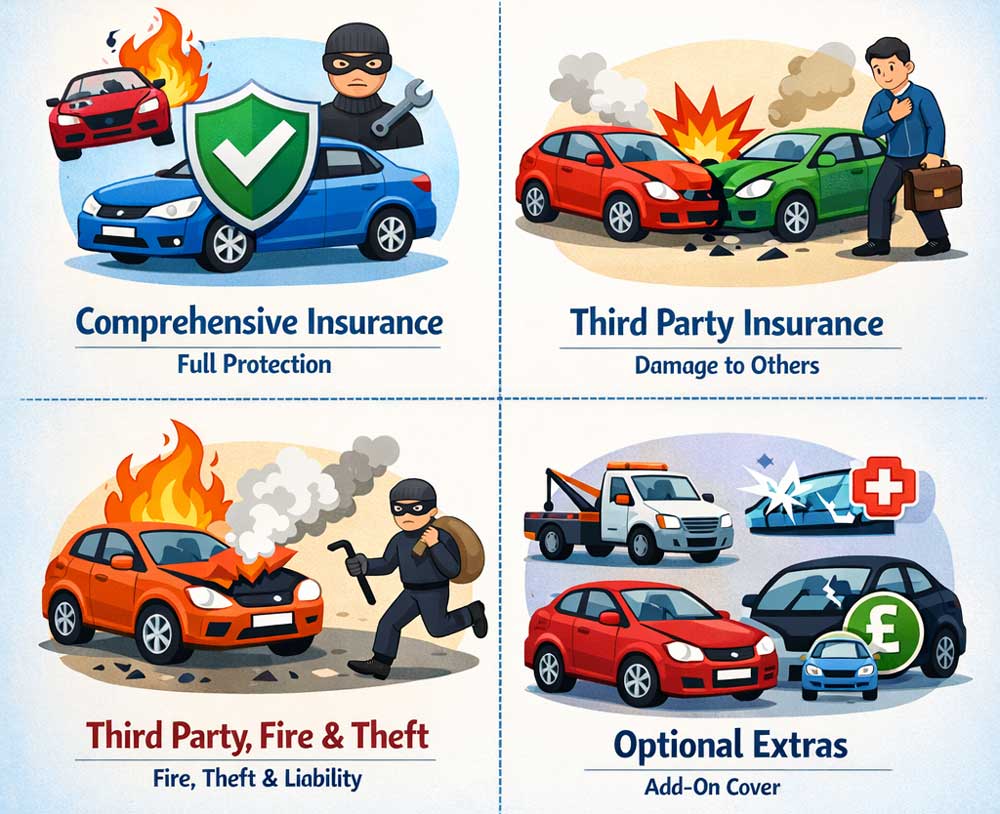
Third party only is the minimum level of cover required to drive legally on UK roads. It covers damage or injury you cause to other people, their vehicles or their property.
It does not cover damage to your own vehicle if you are at fault. If your car is damaged in a collision that you caused, you would normally pay for repairs yourself.
Some people assume third party is always the cheapest option. That isn’t necessarily the case. Pricing depends on claims data and risk profiles, not just the level of cover selected.
Third Party, Fire and Theft
This level includes everything in third party cover, plus protection if your vehicle is stolen or damaged by fire.
It still does not cover accidental damage to your own vehicle where you are responsible. For some drivers, it strikes a balance between minimum cover and comprehensive protection. For others, the price difference between this and comprehensive can be smaller than expected.
Comprehensive Cover
Comprehensive cover includes third party protection and also covers damage to your own vehicle following an accident, even if you are at fault, subject to excess and policy terms.
It often includes additional elements such as windscreen cover as standard, although excess levels may differ. Some comprehensive policies also include limited driving of other cars, but this varies widely and should never be assumed without checking the certificate.
Comprehensive does not mean unlimited. Exclusions and conditions still apply. It simply means the policy includes cover for your own vehicle as well as others.
Common Optional Extras
Many policies allow optional add-ons. These can change both the price and the scope of cover. Common examples include:
- Motor legal protection: Assistance with recovering uninsured losses and legal costs after an accident.
- Breakdown cover: Roadside assistance and recovery services, sometimes UK-only, sometimes including European travel.
- Courtesy car upgrade: Extended or enhanced replacement vehicle options.
- Key cover: Cover for lost or stolen keys and related locks.
- Excess protection: Insurance that reimburses your policy excess after a claim, subject to limits.
Optional extras can be useful, but they increase the premium. It’s worth reviewing whether each extra is necessary or whether you already have similar protection elsewhere.
Agreed Value vs Market Value
Most standard car insurance policies settle total loss claims on a market value basis. That means the insurer pays what the car was worth immediately before the incident, based on available data and comparable vehicles.
Some specialist policies, particularly for classic cars, use agreed value. In that case, the insurer accepts a valuation at the start of the policy. The difference becomes important if a vehicle is written off.
Excess and How It Works
Every policy includes an excess. This is the amount you contribute towards a claim. There is usually a compulsory excess set by the insurer and a voluntary excess chosen by you.
Higher voluntary excess can reduce the premium, but it increases your out-of-pocket cost if you need to claim. The right level depends on what you could realistically afford at short notice.
Driving Other Cars
Some comprehensive policies include limited cover to drive other cars with the owner’s permission. This is usually third party only and often subject to conditions such as age limits and the other car being insured in its own right.
This feature is not universal. It should always be confirmed on your certificate of motor insurance rather than assumed.
Temporary and Short-Term Cover
Short-term or temporary car insurance provides cover for a defined period, often ranging from a day to several weeks. It can be used in situations such as borrowing a car or insuring a vehicle briefly before arranging annual cover.
Eligibility and pricing differ from annual policies, and not all circumstances are accepted.
Choosing the Right Level of Cover
The right type of cover depends on the vehicle’s value, how it is used, and your own circumstances. A very low-value car may not justify comprehensive cover in some cases. A higher-value or financed vehicle often does.
When comparing policies, look beyond the headline level of cover. Check excess amounts, optional extras, exclusions and whether the cover matches how you actually use the vehicle.
For a deeper explanation of how pricing is calculated, see What Affects Car Insurance Costs?. For renewals and mid-term changes, Managing Your Car Insurance Policy explains how policies are typically handled over time.
 They are members of the British Insurance Brokers Association, John Stow House, 18 Bevis Marks, London EC3A 7JB; Membership number: 007759.