
Buying car insurance often feels like a quick job until the quote changes, the insurer asks for extra checks, or you realise two “similar” policies aren’t similar at all. Comparing properly isn’t about reading every line of legal wording. It’s about understanding what moves the price, what can cause an application to be declined, and what to double-check before you pay.
This guide sets out how to compare quotes in a way that makes sense, and how to buy cover without getting tripped up by avoidable admin problems.
Start by Comparing Like with Like
The easiest way to get muddled is to compare a cheap quote with a different excess, different add-ons and different use. If you change multiple inputs at once, you can’t tell what caused the price difference.
When comparing, try to keep these consistent across quotes:
- Vehicle details, including trim and modifications
- Main driver and named drivers
- Annual mileage
- Where the car is kept overnight
- Type of use (social only, commuting, business use)
- Voluntary excess
Then you can judge price differences more fairly.
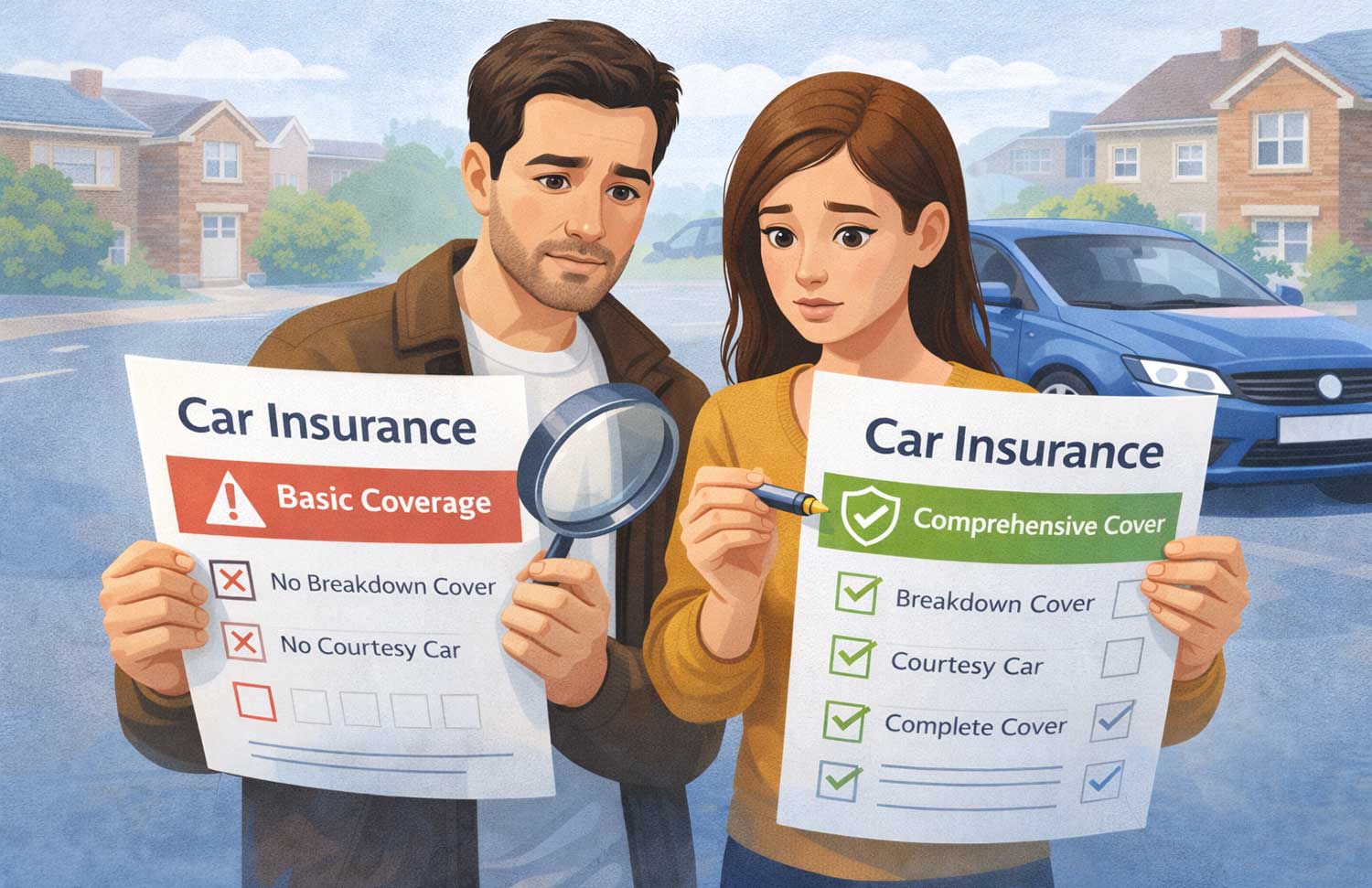
Not all policies are the same. Are you comparing like for like?
Why Quotes Change After You Click Through
It’s common to see a price on a results page and a different price when you click through. That can happen for fairly ordinary reasons:
- The insurer requests extra detail that changes the risk rating
- Different excess levels or add-ons are applied by default
- The quote is refreshed and the insurer’s pricing model has updated
- Eligibility rules are checked more strictly at the next stage
It can be annoying, but it isn’t always a sign of anything underhand. It is usually a difference between a quick indicative price and a fully underwritten quote.
The Details That Typically Matter Most
Some fields have a disproportionate impact on acceptance and price. If you only slow down for a handful of questions, make it these:
- Claims and convictions: Dates and fault status often matter.
- Main driver: This must match who uses the car most.
- Vehicle use: Commuting and work use are frequently mis-declared.
- Occupation: Wording can map to different rating categories.
- Vehicle modifications: Insurers differ on what counts as a modification.
- Address and parking: Postcode and overnight storage affect theft and risk scoring.
If you are unsure about what affects pricing overall, What Affects Car Insurance Costs? explains the main rating factors.
When Cover Starts
Cover can begin immediately or on a future date. If you need cover to start straight away, check the policy start time on the confirmation. “Today” can still mean a later time of day depending on the provider.
If you are buying in advance, ensure the start date matches when your current policy ends. Overlaps can cause confusion. Gaps can leave you uninsured.
Documents and Checks
Insurers sometimes ask for proof after purchase. That can include:
- No claims bonus proof
- Driving licence checks
- Proof of address
- Evidence of vehicle ownership or keeper details
Not every insurer requests these every time, but it is common enough that it’s worth being ready. If proof is requested and not supplied, the insurer may adjust the premium or cancel the policy depending on their terms.
Levels of Cover and Optional Extras
“Comprehensive” is not identical across insurers. One policy might include windscreen cover and a courtesy car, while another might not. Optional extras such as breakdown cover, legal expenses and key cover can also change the overall value.
If you want a clear overview of policy types, Types of Car Insurance Cover sets out the main differences.
Comparing Monthly and Annual Payments
Paying monthly can make insurance more manageable, but it often increases the total cost because interest is usually applied. Paying annually avoids that interest, but requires more money upfront.
When comparing quotes, check whether the monthly figure is a true premium split into instalments, or a credit agreement with interest added. The difference affects the total paid over the year.
Reasons Applications Get Declined
Sometimes a quotation process ends with a decline, and you may not be told exactly why. This can happen due to underwriting rules, fraud-prevention checks, data mismatches or eligibility limits.
Common triggers include:
- Mismatch between declared details and external data checks
- Unusual combinations of driver, car and address risk factors
- Recent cancellations, non-payment issues or previous voidance
- High-risk vehicle use, such as delivery work, declared late in the process
A decline does not necessarily mean you have done anything wrong. It can simply mean that insurer does not want that risk profile.
Keeping a Record of What You Entered
If you’re comparing multiple quotes, it can help to keep a simple note of the details you entered, particularly dates of claims or convictions and annual mileage. This avoids accidentally giving slightly different versions of the same information across applications, which can lead to confusing quote differences.
Before You Pay: A Quick Sense Check
Before completing payment, it’s worth checking:
- The policy start date and time are correct
- The main driver and named drivers are correct
- Your vehicle use is recorded accurately
- The excess levels look sensible
- Any add-ons you want are included, and the ones you don’t want are removed
Buying car insurance should not feel like a trap. A careful comparison, accurate disclosure and a final check of the schedule usually prevent most problems. If you then need to make changes later, Managing Your Car Insurance Policy explains how renewals, mid-term changes and cancellations typically work.
 They are members of the British Insurance Brokers Association, John Stow House, 18 Bevis Marks, London EC3A 7JB; Membership number: 007759.